.png)
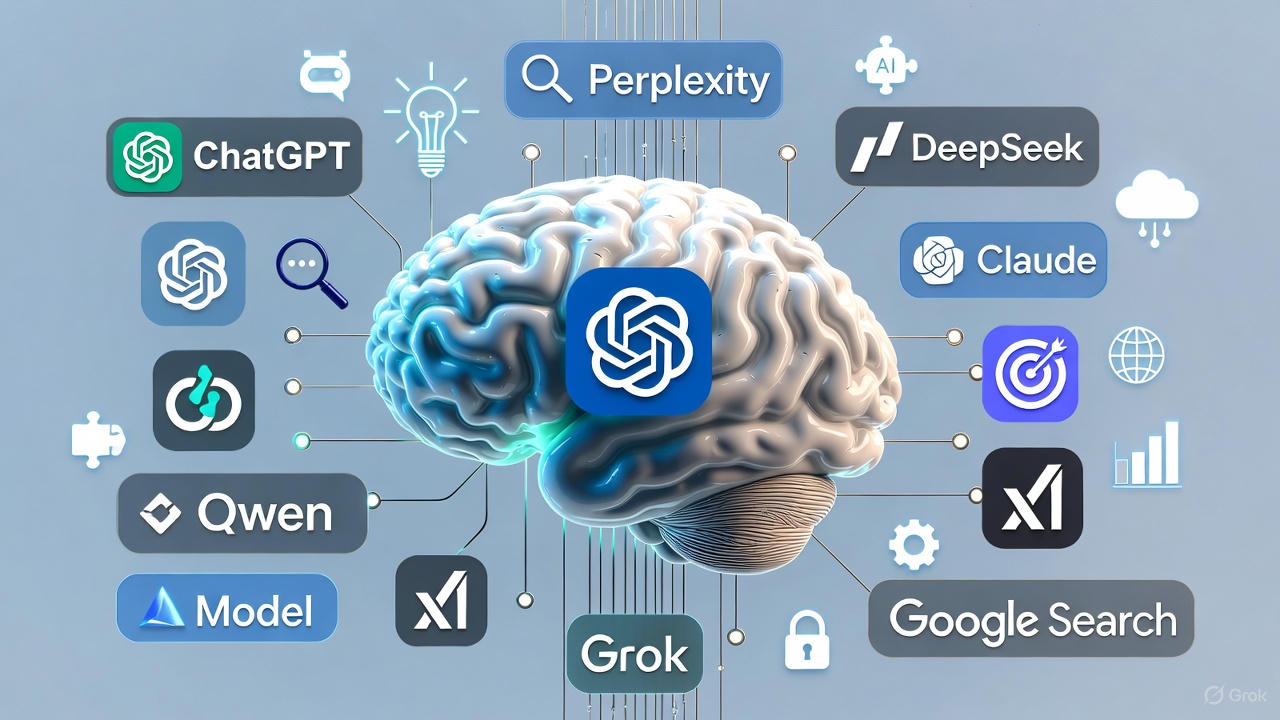

Google is no longer just a list of blue links. It's a synthesis machine. When users ask a question, they get a single, cohesive answer.
If your brand isn't part of that answer, you're invisible.
AI-referred sessions jumped 527% in early 2025. ChatGPT handles 1 billion messages daily. Perplexity processes 780 million monthly queries. Traditional search results are getting pushed down the page – or off it entirely.
The shift is permanent. Gartner forecasts a 50% reduction in traditional organic traffic by 2028 as AI-generated search dominates.
But here's what I've learned: you don't need to rebuild your entire content strategy. With focused adjustments, you can shift from SEO to GEO and reclaim your visibility in AI-powered search.
GEO, or generative engine optimization, focuses on entities – not just keywords. That means your brand, products, services, and subject matter experts. By strengthening these signals, you increase the chances your business gets cited, referenced, and recommended inside AI-generated answers.
Success means moving from "click-through rates" to "citation rates." Winning in this space requires a shift in how you build authority.
The core difference between SEO and GEO
Traditional SEO focuses on keywords. GEO focuses on entities and relationships.
AI models build a map of the world. They connect "Brand A" to "Problem B." Your goal is to strengthen that connection.
Kevin Indig, one of the leading voices in AI search optimization, breaks down the AI visibility pipeline into three critical stages: Retrieved → Cited → Trusted.
Think of it like the classic "crawl, index, rank" framework we've used in SEO for decades. But instead of getting crawled and indexed by Googlebot, you're optimizing to enter an LLM's candidate pool, get selected for citation, and ultimately earn user trust.
AI engines work differently from traditional search. Instead of ranking pages, they cite sources. Instead of a list of links, AI delivers complete answers that anticipate follow-up questions and add context.
Users get what they need faster. Brands get fewer clicks.
Here's a sobering stat from Indig's research: ChatGPT, which handles the majority of LLM traffic, reaches at most 4% of current organic referral traffic. Even more challenging, Gemini provides no clickable citation in 92% of answers, and Perplexity visits about 10 relevant pages per query but only cites 3 to 4.
Organic search demand isn't disappearing, but traffic is. As clicks decline, visibility inside AI responses becomes more critical than ever.
Understanding the AI visibility pipeline
Before diving into tactics, you need to understand how AI search actually works. Based on Indig's framework, there are three stages:
Stage 1: Consideration (Getting Retrieved)
Before any content enters the model's consideration set, it must be crawled, indexed, and fetchable within milliseconds during real-time search.
This is where server response time becomes critical. LLM retrieval operates under tight latency budgets. Slow responses prevent pages from entering the candidate pool because they miss the retrieval window. Sites with less than 1-second load times receive 3x more Googlebot requests than sites over 3 seconds.
Your goal: Maintain server response times under 200ms.
Stage 2: Relevance (Getting Cited)
Here's where it gets interesting. According to research from "The Attribution Crisis in LLM Search Results" (Strauss et al., 2025):
- 24% of ChatGPT responses are generated without explicitly fetching any online content
- Gemini provides no clickable citation in 92% of answers
- Perplexity visits about 10 relevant pages per query but cites only 3 to 4
Models can only cite sources that enter the context window. Pre-training mentions often go unattributed. Live retrieval adds a URL, which enables attribution.
Stage 3: Trust (Earning Action)
Trust is critical because we're dealing with a single answer in AI Search, not a list of search results. Users who click through require stronger trust signals before taking action because they're validating a definitive claim.
This is where third-party validation becomes essential. Indig's research shows that 85% of brand mentions in AI search for high purchase intent prompts come from third-party sources, not owned content.
What you need to do now
You don't need to reinvent your approach. These strategies build on what you already do, with added focus on structure, clarity, and AI-friendly formatting.
1. Understand your selection rate and primary bias
This is the foundation that most brands ignore.
Primary bias measures the brand-attribute associations a model holds before grounding in live search results. Selection rate measures how frequently the model chooses your content from the retrieval candidate pool.
LLMs are biased by training data. Models develop confidence scores for brand-attribute relationships (like "cheap," "durable," "fast") independent of real-time retrieval. These pre-existing associations influence citation likelihood even when your content enters the candidate pool.
Your goal: Understand which attributes the model associates with your brand and how confident it is in your brand as an entity. Then systematically strengthen those associations through targeted campaigns.
To test this, run queries in ChatGPT, Claude, and Perplexity asking about your industry category. See if your brand appears. Note the context and attributes mentioned. This tells you what the model "thinks" about you before it even retrieves your content.
2. Implement schema markup across your high-value pages
Structured data is the bridge between your text and the AI's database. It tells the engine exactly what a price, a rating, or a founder's name is. Without it, the AI has to guess.
Pages with proper schema markup get cited 40% more often than pages without it.
Most sites ignore advanced schema. I've seen this create massive opportunities for brands willing to implement it correctly.
Start with these five schema types:
Article Schema includes headline, author credentials, publish date, and publisher information. AI engines heavily weight expertise signals, so complete author profiles matter.
FAQ Schema provides direct question-answer pairs. This is the foundation of Answer Engine Optimization (AEO). AI engines prioritize content that answers a specific query in the first 100 words.
Organization Schema establishes your company as a recognized entity in AI knowledge graphs. This helps AI models connect your brand to relevant topics and queries.
Product Schema is required for e-commerce visibility. AI engines need structured product information – pricing, availability, reviews – to make recommendations.
For e-commerce brands, Indig recommends going further: Submit merchant-controlled product feeds to ChatGPT's merchant program (chatgpt.com/merchants) in JSON, CSV, TSV, or XML format with complete attributes. Implement ACP (Agentic Commerce Protocol) for agentic shopping.
HowTo Schema works for instructional content. Step-by-step formats are easy for AI to parse and cite.
Use JSON-LD format for every product and service. It separates structured data from HTML, making maintenance easier and reducing errors.
Microsoft's Principal Product Manager confirmed that schema markup helps large language models understand content context.
Poor schema implementation hurts more than it helps. Watch for incomplete required fields, mismatched data between visible content and markup, and duplicate schema from multiple plugins or tools.
3. Master Answer Engine Optimization (AEO)
AEO is the foundation of GEO. AI engines prioritize content that directly answers queries.
The formula:
- State the question
- Provide a direct answer
- Support it with data
I recommend placing a 50-word summary at the top of every page. This direct answer block gives AI engines exactly what they need to cite your content.
To rank in AI-powered search optimization, you must provide the training data the model needs. Large Language Models value density and clarity. They don't browse the web like humans. They ingest data points.
Build FAQ libraries from real customer questions – support tickets, sales calls, community forums. Indig emphasizes that FAQ formats align with how users query LLMs ("How do I...," "What's the difference between..."). This structural and linguistic match increases citation and mention likelihood compared to keyword-optimized content.
Use precise language. Define your terms. Avoid vague adjectives.
4. Prioritize content freshness
Here's a stat that should change your content calendar: Over 70% of pages cited by ChatGPT were updated within 12 months, but content updated in the last 3 months performs best across all intents.
LLMs parse last-updated metadata to assess source recency and prioritize recent information as more accurate and relevant.
Your goal: Update content within the past 3 months for maximum performance.
Add "Last updated: [date]" timestamps to every page. Use DateModified schema. Make substantive updates, not just changing a date. AI models can detect superficial freshness tactics.
5. Build your semantic footprint across the web (Webutation)
AI models don't just look at your website. They look at the entire web to see what people say about you. Indig calls this "Webutation" – your reputation across the web.
If a model sees your brand mentioned on Reddit, GitHub, and niche industry forums, it views you as a trusted entity. These citations and brand mentions act as votes of confidence.
Here's the critical insight from Indig's research: 85% of brand mentions in AI search for high purchase intent prompts come from third-party sources. Third-party content provides independent verification of claims and establishes category relevance through co-mentions with recognized authorities.
The Reddit Factor: LLMs are heavily trained on Reddit data. Reddit citations in AI overviews surged from 1.3% to 7.15% in three months. User-generated content now makes up 21.74% of all AI citations.
When AI Overviews appear, clicks on Reddit and YouTube grow from 18% to 30% because users seek social proof. YouTube and Reddit are consistently in the top 3 most cited domains across LLMs.
Contribute genuine insights in relevant subreddits without promotional language. Reddit Answers uses AI to summarize community threads, and these summaries appear across AI platforms.
Review platforms like G2, Capterra, and Trustpilot surface in commercial queries. Research shows 100% of tools mentioned in ChatGPT answers had reviews on Capterra, while 99% had reviews on G2.
Encourage detailed customer reviews that explain specific use cases.
LinkedIn and Medium for professional content with verified author credentials. These platforms strip away clutter and prioritize posts with strong structure and depth.
Quora where question-answer format matches AI interaction patterns. Direct responses to real questions get pulled into AI training data.
Publishing on high-authority sites matters, but authentic engagement matters more. AI engines detect promotional spam.
6. Don't ignore traditional SEO rankings
Here's something that surprised me in Indig's research: Organic search position still matters tremendously.
Many LLMs use search engines as retrieval sources. Higher organic rankings increase the probability of entering the LLM's candidate pool and receiving citations.
Pages in the top 10 show a strong correlation (~0.65) with LLM mentions, and 76% of AI Overview citations pull from these positions.
But here's the nuance: Don't just focus on head terms. Since LLM prompts are conversational and varied, pages ranking for many long-tail and question-based variations have higher citation probability.
Your goal: Rank in Google's top 10 for fan-out query variations around your core topics, not just head terms.
Caveat: Correlation varies by LLM. Overlap is high for AI Overviews but low for ChatGPT.
7. Structure content for AI extraction
AI engines are efficient. They prefer content that is easy to parse. AI-friendly content formatting is a competitive advantage.
Since prompts average 5x the length of keywords, structured content answering multi-part questions outperforms single-keyword pages.
Use semantic HTML5 elements instead of generic div tags. Proper heading hierarchy (H1, H2, H3) signals content structure to AI crawlers.
Include these elements on every page:
Clear section headers with descriptive H2 and H3 tags that summarize what follows. Vague headers confuse AI parsers.
Summary paragraphs at the start of each section. Brief overviews help AI understand context before diving into details.
Bullet lists for key points. AI can extract list items as discrete, quotable facts more easily than parsing dense paragraphs.
Data tables for comparisons. Use tables for comparisons, lists for enumeration. Increase fact and concept density to maximize snippet contribution probability.
Author bylines with name, credentials, and company affiliation. E-E-A-T signals matter for AI citation decisions.
Publication and update dates. Freshness signals help AI determine whether information is current and relevant.
Avoid JavaScript-dependent content. If core information only renders with JavaScript, most AI crawlers can't access it. Static site generators or progressive enhancement ensure content works without JavaScript execution.
8. Create entity-rich content that builds topical authority
Create entity-rich content by connecting your primary topic to related concepts. These connections help the AI understand the context of your expertise.
Example: If writing about "SaaS accounting," mention "GAAP compliance," "ledger automation," and "tax nexus." These related entities signal depth and specialization.
AI models value density and clarity. They ingest data points and build relationship maps. When your content consistently connects relevant entities, you build topical authority in the AI's knowledge graph.
9. Display demonstrated expertise prominently
AI search delivers single answers rather than ranked lists. Users who click through require stronger trust signals before taking action because they're validating a definitive claim.
Display author credentials, industry certifications, and verifiable proof (customer logos, case study metrics, third-party test results, awards) prominently. Support marketing claims with evidence.
This isn't just about looking credible – it's about giving AI models the signals they need to understand you're an authoritative source.
AI engines reward clear, authoritative content with strong E-E-A-T signals:
Experience: Share first-person insights. AI values practitioners over theorists.
Expertise: Include author credentials and link to professional profiles.
Authoritativeness: Cite peer-reviewed research, government data, and industry standards.
Trustworthiness: Keep information accurate and current. Update regularly.
Medical, financial, and legal content requires especially strong E-E-A-T signals.
10. Fix citation gaps before competitors do
Citation gaps occur when AI cites sources mentioning competitors but not you.
Find gaps by asking ChatGPT industry questions. Note cited sources. Check if they mention competitors.
Fix gaps: Reach out to cited sources. Offer expert quotes. Provide original data. Engage in niche forums where AI scrapes consensus.
Getting included in sources AI already trusts is faster than building new authority.
Measuring success in the AI era
Old metrics like "Time on Page" are becoming less relevant. You need AI visibility tracking.
| Metric | Traditional SEO | GEO Focus |
|---|---|---|
| Primary Goal | Rank #1 on Google | Be the Citational Source |
| Content Type | Long-form articles | Structured data & Direct answers |
| Tracking | Keyword rankings | Brand presence in LLM responses |
| Success Sign | High Clicks | High Mention Frequency |
Track branded search volume, AI citation frequency across ChatGPT/Claude/Perplexity, zero-click traffic patterns in Search Console, and review platform analytics.
Use tools like Search Party (mentioned in Indig's research) that simulate prompts across different LLMs to see if your brand appears. This is the new benchmark for digital presence.
I've seen companies with impressions up 54% while clicks drop 15%. Brand mentions in AI responses drive delayed branded searches.
Common mistakes that kill AI visibility
Blocking AI crawlers in robots.txt guarantees invisibility. JavaScript-dependent content gets skipped by most AI crawlers.
Incomplete schema confuses AI engines. Keyword-stuffed content gets detected instantly. Missing external citations reduce trust. Stale content in time-sensitive topics gets deprioritized.
Factual inconsistencies between your content and authoritative sources kill citation likelihood.
Timeline for GEO results
AI citations accumulate gradually as your content enters training datasets.
Weeks 1-4: Schema implementation complete Weeks 5-8: First citations appear Weeks 9-16: Citation frequency increases Months 4-6: Sustained visibility across platforms
Some implementations achieve a 55% increase in AI citations within 14 to 30 days. Results vary by industry competitiveness and content quality.
From choice to conviction
As Indig puts it: "Search is moving from abundance to synthesis."
For two decades, Google's ranked list gave users a choice. AI search delivers a single answer that compresses multiple sources into one definitive response.
The mechanics differ from early 2000s SEO:
- Retrieval windows replace crawl budgets
- Selection rate replaces PageRank
- Third-party validation replaces anchor text
But the strategic imperative is identical: earn visibility in the interface where users search.
Traditional SEO remains foundational, but AI visibility demands different content strategies:
- Conversational query coverage matters more than head-term rankings
- External validation matters more than owned content
- Structure matters more than keyword density
Your action plan
The goal of generative engine optimization strategies is to become a data point that AI cannot ignore. Optimize for the machine to reach the human.
Start today with your ten highest-value pages:
- Implement complete schema markup
- Add FAQ sections based on real customer questions
- Update content freshness timestamps
- Test citations in ChatGPT and Claude
- Build presence on Reddit, YouTube, and review platforms
- Measure branded search volume weekly
- Track your selection rate and primary bias
- Monitor server response times
Your competitive advantage comes from moving while competitors wait. AI citations compound over time as more platforms reference your content in their training data and retrieval systems.
Focus on clear definitions, structured data, and community-validated authority. High citation frequency leads to high trust.
The businesses winning AI citations in your industry aren't necessarily the ones with the biggest SEO budgets. They're the ones who recognized this shift early and adjusted their content strategy accordingly.
Build a brand that AI engines want to quote.
Sources & Further Reading:
- Kevin Indig's AI Search Research (January 2025)
- "The Attribution Crisis in LLM Search Results" (Strauss et al., 2025)
- Gartner AI Search Traffic Forecast (2025)